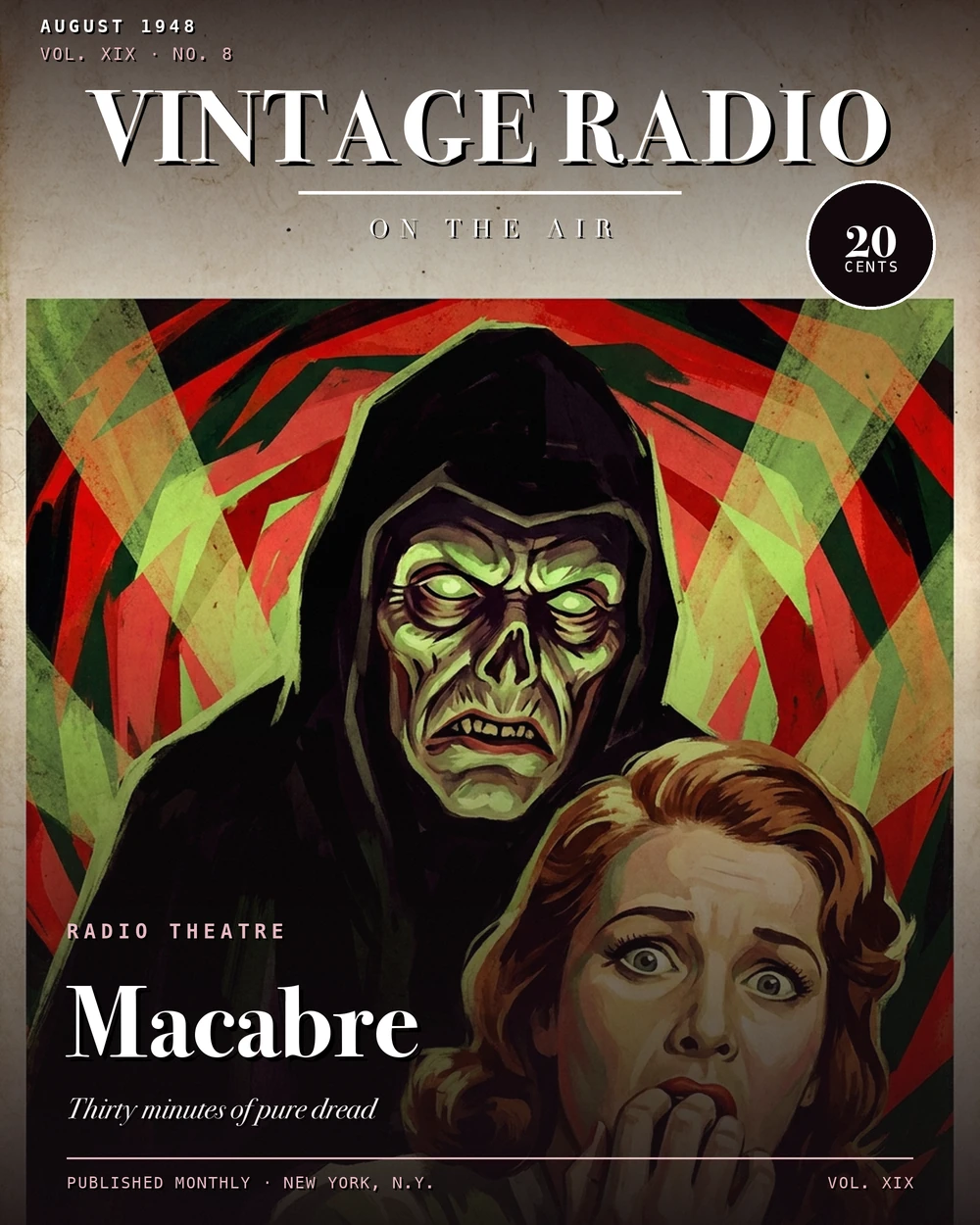
Macabre
Made in Tokyo, Heard Around the World
Macabre arrived at a peculiar moment from a peculiar place. In November 1961, a horror anthology rolled out of the Far East Network studios in Tokyo, produced not by one of the major American networks but by the Armed Forces Radio and Television Service. FEN broadcast it weekly at around 9 PM on the Tokyo signal, and AFRTS Washington then transcribed the episodes and shipped them to armed forces networks around the world. The run lasted through January 8, 1962, with each episode clocking in at roughly thirty minutes.
The series came into existence through a production contest between FEN Tokyo and Armed Forces Network Germany. Tokyo won, and the result was nine episodes of original horror radio — eight of which still circulate today.
The Man Behind It
The driving force was William Verdier, Assistant Production Director for FEN. He had worked for both NBC and CBS before relocating to Japan, and he brought that experience with classic American radio drama — Inner Sanctum, Suspense, Ellery Queen — directly to bear on the new series. Verdier wrote most of the scripts and directed most of the episodes himself.
He wasn't shy about what the show intended to be. Previewing the November 13, 1961 premiere in the Pacific Stars and Stripes, Verdier was direct: "There will be no holds barred, and when people get killed, you will hear it happen." Beyond writing and directing, he also handled sound effects — a one-man operation in several respects. His daughter has confirmed, in a public account, that family members were occasionally drafted into the studio to scream or deliver lines. The closing announcement of each episode identified the series as "A special Far East presentation" and credited Verdier by name as writer and director.
What Each Episode Was
Macabre used an anthology format, meaning each installment brought new characters and a new story. The titles give a sense of the range: "The Midnight Horseman," "The Crystalline Man," "The House in the Garden," "Final Resting Place," "The Man in the Mirror," "The Edge of Evil," "The Avenger," and "Weekend." Many were adapted from or inspired by existing novels and short stories. The blend leaned toward psychological unease alongside outright supernatural subject matter, and atmospheric sound design was central to how each story worked — sound was the only tool available, and Verdier clearly knew how to use it.
The cast was largely military personnel and FEN staff rather than professional radio actors. Some servicemen doubled as sound engineers. The production was genuinely a local operation, built from whoever was on hand at the Tokyo studios.
Where It Sits in Radio History
Macabre aired at the very end of old-time radio's run, sometimes described as having slipped in just under the wire. Shows like The Creaking Door, Dark Fantasy, and Hall of Fantasy are its natural neighbors. What distinguishes Macabre is the circumstances of its making — produced overseas, by Armed Forces Radio, with no professional cast, by a writer-director who had trained at the major American networks and then found himself in Japan with a chance to build something from scratch.
There are indications that a possible second season began around December 10, 1962 and ran roughly eighteen weeks, though no episodes from that potential second run appear to have survived in any significant way. The eight surviving episodes represent the complete known record of what Verdier and the FEN Tokyo team put together in the winter of 1961–1962.